How to Play (2–6 Players)
1) Each player creates 1 hero. Party needs 2–6 heroes. 2) Pick a dungeon. 3) The game narrates a scene — discuss as a party, then the active hero picks a choice. 4) Many choices need a d20 + attribute modifier vs a Difficulty (DC). Meet or beat it = success. 5) In combat, heroes act in initiative order, then the monster acts. Reduce it to 0 HP before it does the same to you. 6) Rest at shrines to heal. Nat 20 always succeeds spectacularly; Nat 1 always fails comically.
Attributes & Modifiers
| Attribute | Used for | Astra Tongue |
|---|
| Might | Melee, lifting, intimidation | Khun-A |
| Agility | Stealth, dodge, ranged, flee | Hlyin-Myan-Mhu |
| Wisdom | Lore, perception, Naga magic | Pyinnya |
| Spirit | Nat bargaining, healing, wards | Seik-Dat |
| Charm | Persuasion, trickery, court talk | Hswe-Hsaung-Mhu |
| Endurance | HP, poison, long marches | Khan-Naing-Ye |
Modifier = ⌊(Score − 10) / 2⌋. HP = 10 + Endurance mod × 2 + Level. Defense = 10 + Agility mod.
Difficulty Classes (DC)
| DC | Task |
|---|
| 8 | Easy — village gate |
| 12 | Moderate — typical check |
| 15 | Hard — Nat shrine riddle |
| 18 | Heroic — Belu King himself |
Combat in 4 Steps
1. Initiative: d20 + Agility mod, highest first. 2. Attack: d20 + Might (melee) or Agility (ranged) vs enemy Defense. Hit = roll damage (weapon die + mod). 3. Powers: Nat Speakers & Mystics spend Spirit to heal/blast. 4. Defend/Flee: Defend = +4 Defense till next turn. Flee = Agility DC 12 or take a parting hit.
The 37 Nats (Abridged)
Myanmar's spirit pantheon, formalised by King Anawrahta at Bagan. Famous Nats you'll meet: Mahagiri (Lord of the Great Mountain, Popa), Hnamadawgyi (his sister, Lady Golden Face), Shwe Myo Pin, Thonbanhla, Ma Ngwe Taung, Shin Nemi, and the Min Mahagiri house Nat in every home's coconut shrine. Offer bananas & coconut, never beef near Popa, and don't wear red/black at certain shrines — the Nats notice.
Bestiary of Myanmar
| Creature | Notes |
|---|
| Chinthe | Lion guardian of pagodas. Proud, honorable, tests heroes. |
| Belu | Ogre of Popa jungle. Huge Might, loves riddles & rice wine. |
| Naga | Serpent king under lakes. Wise, venomous, keeps sunken treasure. |
| Galon (Garuda) | Eagle king, eternal foe of Nagas. Patron of knights. |
| Nat | Human-turned-spirit. Powerful, petty, party-loving. Bargain carefully. |
| Byala / Zawgyi | Alchemist wizard with flying hat. May offer immortality… at a price. |
AI Nat Master (Exactly 2 Players)
When the party is exactly 2 heroes, the AI Nat Master takes the Game Master's seat so both humans can play. It invents a 5-scene quest plus a final boss, sets DCs that scale with depth (DC 11–15), and rules on anything you type: it maps your action to an attribute (fighting → Might, sneaking → Agility, praying → Spirit, reasoning → Wisdom, talking → Charm, enduring → Endurance), rolls d20 + your modifier, and narrates the outcome. Success earns gold and glory; failure costs 1d4 HP but always moves the story forward — the GM never lets a bad roll end the tale. Heroes alternate as active hero each scene. Against the Hollow Nat, land 3 successful blows before your party falls. With 3+ heroes, a human Nat Master is recommended instead.
Being the Nat Master
Read scenes aloud with drama. Do voices for Nats (slightly offended, always). Let players try anything — set a DC and roll. A failed roll should move the story forward with a cost, not stop it. End sessions at shrines with tea and a cliffhanger.
The Astra & Its Eight Regions
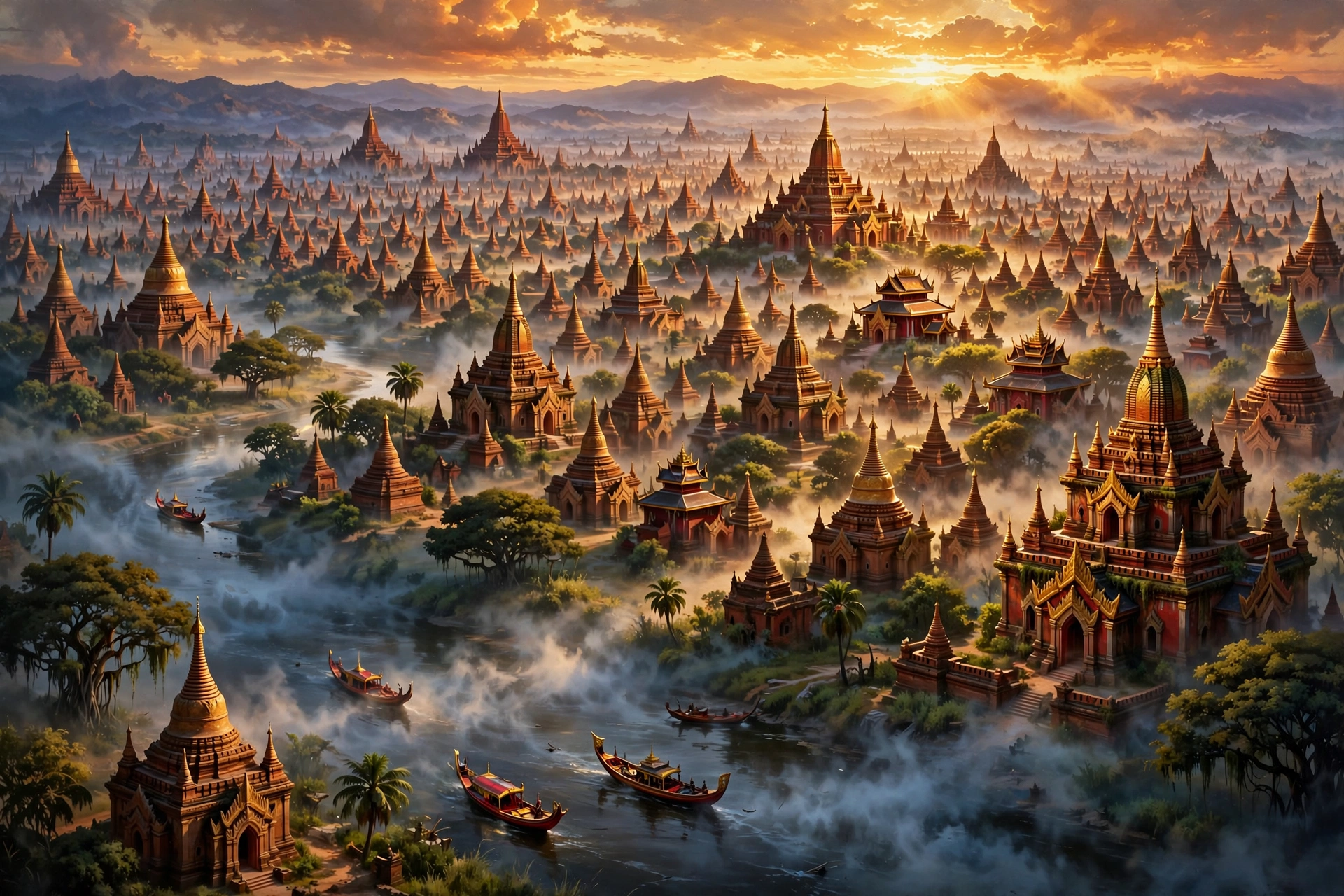
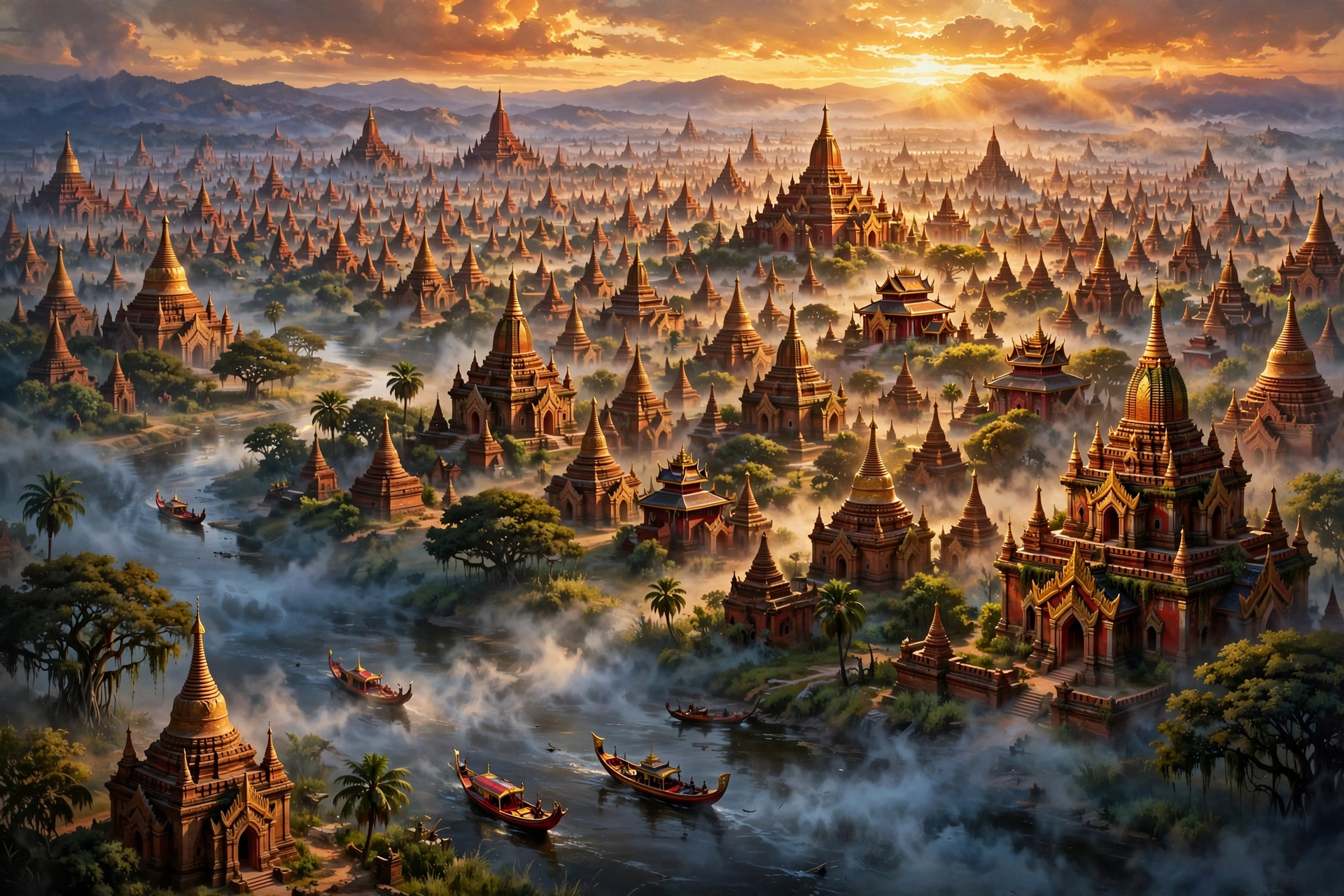
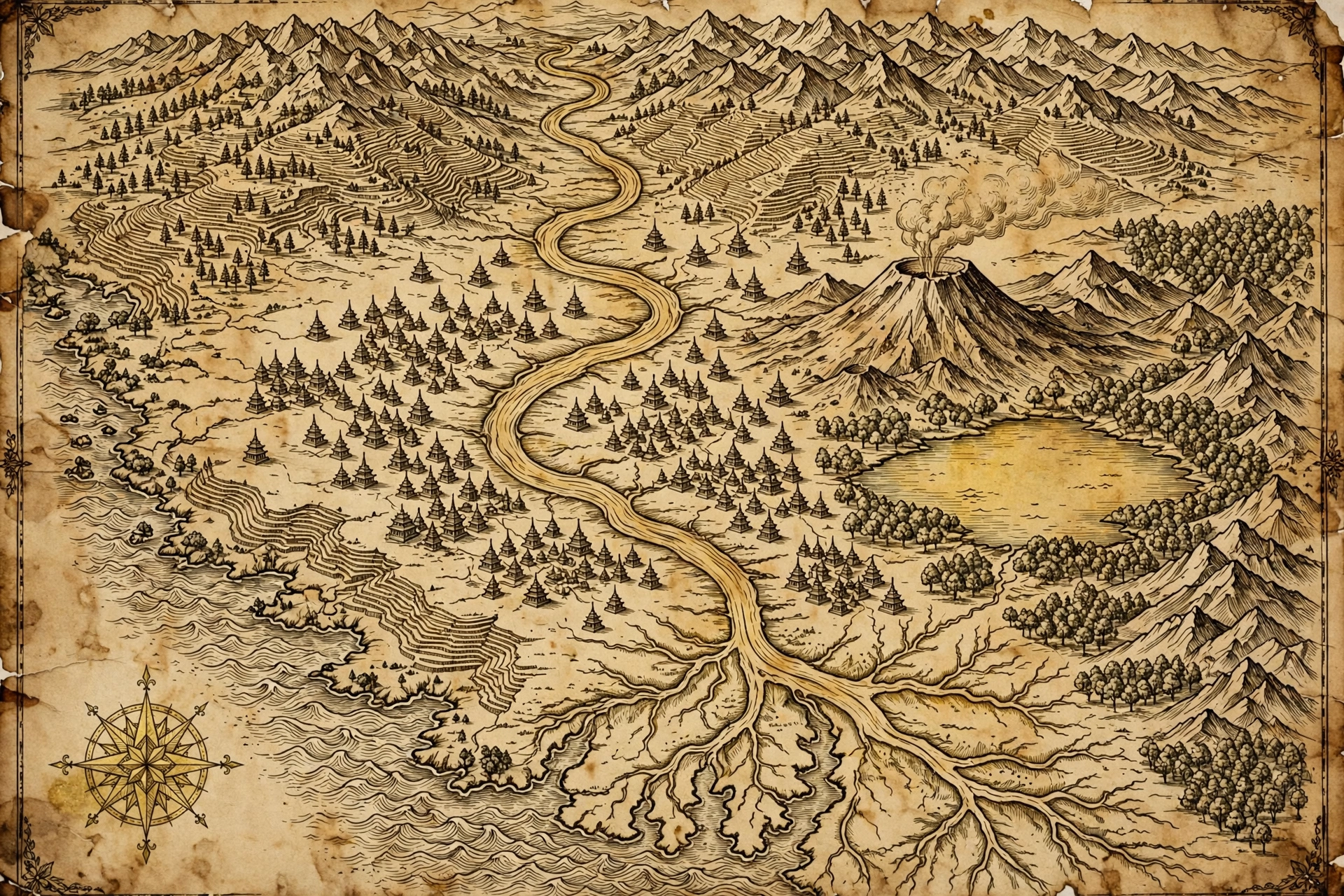
The Astra is the golden land between the northern snows and the southern sea, ruled from no throne — the 37 Nats hold it in uneasy truce. Bagan Plains: four thousand stupas and the Chinthe who guard them. Mount Popa: the gods' own volcano, home of Mahagiri. Inle Lake: stilt villages above Naga courts. Rakhine Coast: pirate coves and tide temples. Shan Hills: terraced tea hills and star shrines. Irrawaddy Riverlands: the great river road of kings and smugglers. Chin Highlands: mist, tattooed warriors, sky-burial cliffs. Tanintharyi Forests: the deep green where the oldest trees remember older gods. Travel from the World Map; each region hides a quest, a monster, and someone who needs help.
Signature Powers & Spirit
Every Path learns 3 signature powers, unlocked at Levels 1, 2 and 3. Powers cost Spirit Points (SP) — each hero holds 3 + Spirit modifier SP, restored by a Long Rest. In combat, choose Powers on your turn; out of combat, use a hero's unlocked powers from their roster card. Zawgyi alchemy turns lead to luck; a Galon Knight calls the sky down; a Nat Speaker lets the 37 speak through one mouth. Powers never fizzle quietly — the Astra notices style.
Weapons of the Astra
A hero's weapon sets their damage die. Dha (the Burmese blade, d8), Spear (d8), War Bow (d6, Agility), Nat Drum (d6, Spirit), Jade Staff (d8, Wisdom), Hunting Bow (d6, Agility), Twin Daggers (d4+d4) and more. Weapons carry rarity — Common Fine Epic Legendary — granting +0 to +3. Any weapon can be upgraded at the roster with party gold: each +1 costs more than the last, and a +3 blade hums near Nats. Choose your starting weapon in the Creator; re-equip anytime from the roster.
Experience & Renown
Victories grant the whole party XP: 40 for a monster, more for a region quest or a dungeon crown. Levels rise at 120 XP per level. Each level brings +1 max HP, and Levels 2 and 3 unlock your Path's greater powers. The Astra keeps score in temple murals — heroes who finish regions get their faces painted a little larger.
Glossary of the Astra
Every tongue of the Astra, glossed for travellers: the word as the Astra speaks it (in Latin letters), then its meaning.
| Word | Meaning |
|---|
| Nat | A spirit of the Thirty-Seven — once human, now powerful, petty and party-loving |
| Nat Saya | “Spirit Master” — a medium who speaks with the Nats |
| Naga | Serpent king of lakes and rivers, keeper of sunken treasure |
| Galon | The Garuda, eagle king and eternal foe of the Nagas |
| Belu | An ogre of the jungle hills — huge, hungry, fond of riddles |
| Chinthe | The lion guardian carved at every pagoda gate |
| Zawgyi | An alchemist-wizard who seeks the elixir of life |
| Dha | The single-edged Burmese sword |
| Saung | The boat-shaped arched harp of the old courts |
| Thanaka | Cooling golden bark paste worn on the cheeks |
| Pe | A palm-leaf manuscript, inked and bound with cord |
| An-Sa | Dice — and the board they are thrown upon |
| Mahagiri | “Lord of the Great Mountain”, first of the 37 Nats, of Popa |
| Ava | The old royal capital on the great river |
| Ayeyarwady | The Irrawaddy, the Astra's great river road |
| Pwè | A festival — dancing, drums, and offerings all night |
| Kan Kaung Bar Say | “May you be lucky” — the dice-prayer's blessing |